
Was that too harsh? Well, the truth hurts—and so does writing a $10,000 check for someone else's mistake.
Aloha Jail Mail readers:
.2607140709330.png)
A few weeks ago, I spent time on the phone with Civil Beat journalist Makana Eyre discussing the reality of bail enforcement in Hawaiʻi. I will admit, I was not compelled by the arguments presented to feel strongly about additional regulation to the fugitive recovery industry; in fact, calling it an "industry" seemed like an overstatement for a practice that rarely even takes place in the state of Hawaii.
.2607140710253.png)
As the top commentator on the article posted: "this feels less like a case for reform and more like an argument in search of a problem."

I want to reimagine the article and write what I would find interesting and educational. Let's peel back the curtain on how the system actually works, and why—at its core—bounty hunting is for LOSERS.
Why Bounty Hunting Means You Already Lost
The biggest reason why bounty hunting is for losers relates back to the very root cause of why an agent is hunting in the first place: a failure in underwriting. If a bail agent writes a $11,000 policy and that defendant skips town, the bail agent is the first big loser.
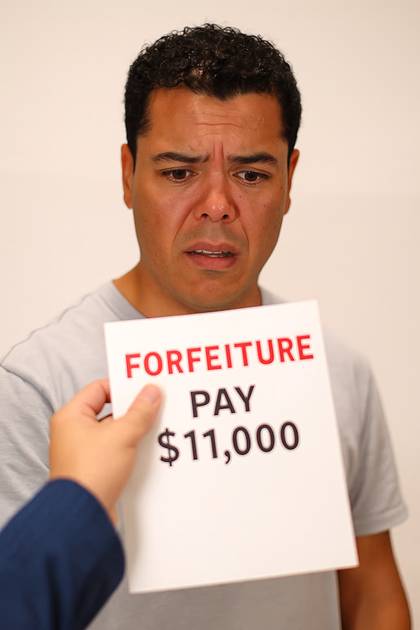
The financial layers of losing are devastating to a small business. You only collect 10 cents for every dollar of liability you carry. So in easy numbers, you've only collected $100 for $1,000 worth of liability. No matter how you slice it, a skip forces the agent to cut checks left and right just to avoid a total financial wipeout.
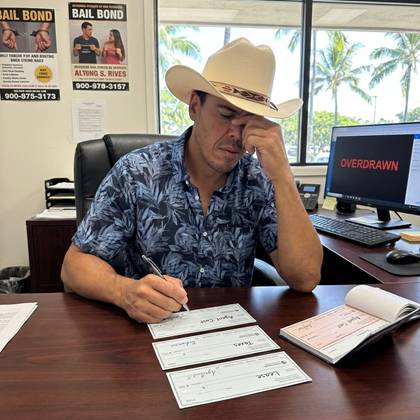
When you render a service, treat someone fairly to get them out of custody, and they run, it feels exactly like being lied to and cheated on in a personal relationship. It leaves you behind a financial eight-ball, causing sleepless nights over an obligation you trusted someone to uphold.

The second big loser is the complainant or victim in the case. A complainant won't get justice unless the defendant actually goes through the criminal justice system, and is either punished or exonerated from legal liability. Ultimately, the complainant is the big winner when somebody willfully absconds and then is caught, since without that consequence, a defendant can get away with anything, without any repercussions.
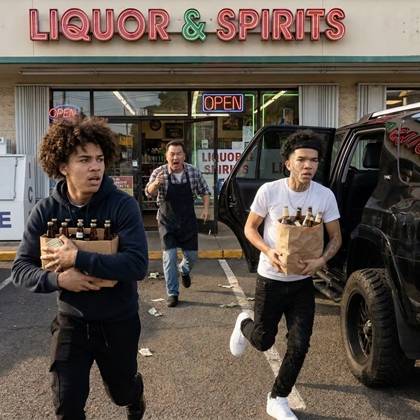
Finally, the defendant is a major loser. Bench warrants in Hawaiʻi never expire. You don't get away; you simply live a compromised life in the shadows until you eventually get caught.
The NCIC Black Box

While commercial bail agents stand ready to fund 100% of the extradition costs to bring fugitives back to the islands, we are consistently blocked by a broken tool: the National Crime Information Center (NCIC) computer. The prosecutor's office frequently refuses to enter felony warrants into the nationwide NCIC system, claiming the case doesn't meet their internal, hidden criteria. This creates an impossible catch-22. If a fugitive leaves the island and the prosecutor blocks NCIC entry, mainland law enforcement cannot view or verify the warrant, rendering it legally impossible for a recovery agent to apprehend them.

Logistically, an agent cannot strong-arm a fugitive through a federal TSA checkpoint and force them onto a commercial airliner.

The government often demands that bail companies "pay the piper" on a forfeiture while simultaneously refusing to grant the legal tools required to bring the fugitive back to court. Perhaps this is the area that requires more regulation, huh? Shouldn't warrants be inputted automatically, so that other states know to arrest Hawaiʻi fugitives on felony warrants?!
The Public-Private Venture of Fugitive Recovery

Bounty hunting isn't a rogue vigilante operation; it functions as a highly practical public-private partnership. The Honolulu Police Department is systematically overburdened, forcing officers to prioritize active, high-level threats to public safety. As a result, tens of thousands of older bench warrants sit unserved in state files.

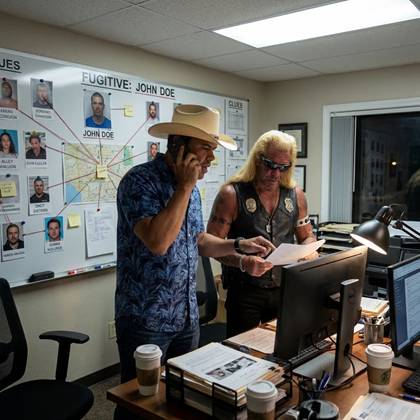
Law enforcement typically only stumbles onto failure-to-appear fugitives by coincidence during a routine traffic stop or the commission of a new offense. In contrast, licensed fugitive recovery agents can work around the clock with absolute focus on a single fugitive. You'd be surprised how easily that focus turns into obsession when you are staring down a massive forfeiture penalty.
The Reality Behind the Screen
The era of hyper-dramatized television bounty hunting has long since passed. Figures like Dog the Bounty Hunter survived financially because their operations were heavily subsidized by Hollywood television production budgets, not standard fugitive recovery margins.
Because local bail agents operate on a razor-thin profit margin for the liability we take on, a successful business plan demands a zero-loss ratio. If just 1% of your clients don't make all their court appearances, you'll be out of business—and the math is very simple. Pay 10X what you collect on a single forfeiture, and all it takes is one mistake to put you out of business. There's a severe financial consequence to poorly underwriting risk. To stay in business, bail agents must avoid bounty hunting. If you're a loser in underwriting, you'll be a loser forced into bounty hunting, and you're only one skip away from being a loser who is out of business altogether.
The Department of Insurance and HPD maintain rigid boundaries on fugitive recovery. To surrender anyone into custody, an agent must present a valid insurance producer's license, which requires passing state background checks, staying current on taxes, following the Department of Insurance's lengthy code of ethics, and completing additional mandatory continuing education ethics courses every two years.
Bounty hunting remains a loser's errand, a costly consequence of poor underwriting practices on the issuance of a bail bond policy. Perhaps the real reason why there haven't been many problems locally is because of those strict financial consequences. As one of the commenters on Mr. Eyre's article said, "follow the money"—and as I watch that money leave my business, I can't help but want to claw back both the fugitive and the forfeiture, since a failure to lawfully comply with existing laws and regulations simply means I am out of business.
Stay Vigilant Folks,
-Jail Mail Nick