Aloha, Jail Mail readers. |
|
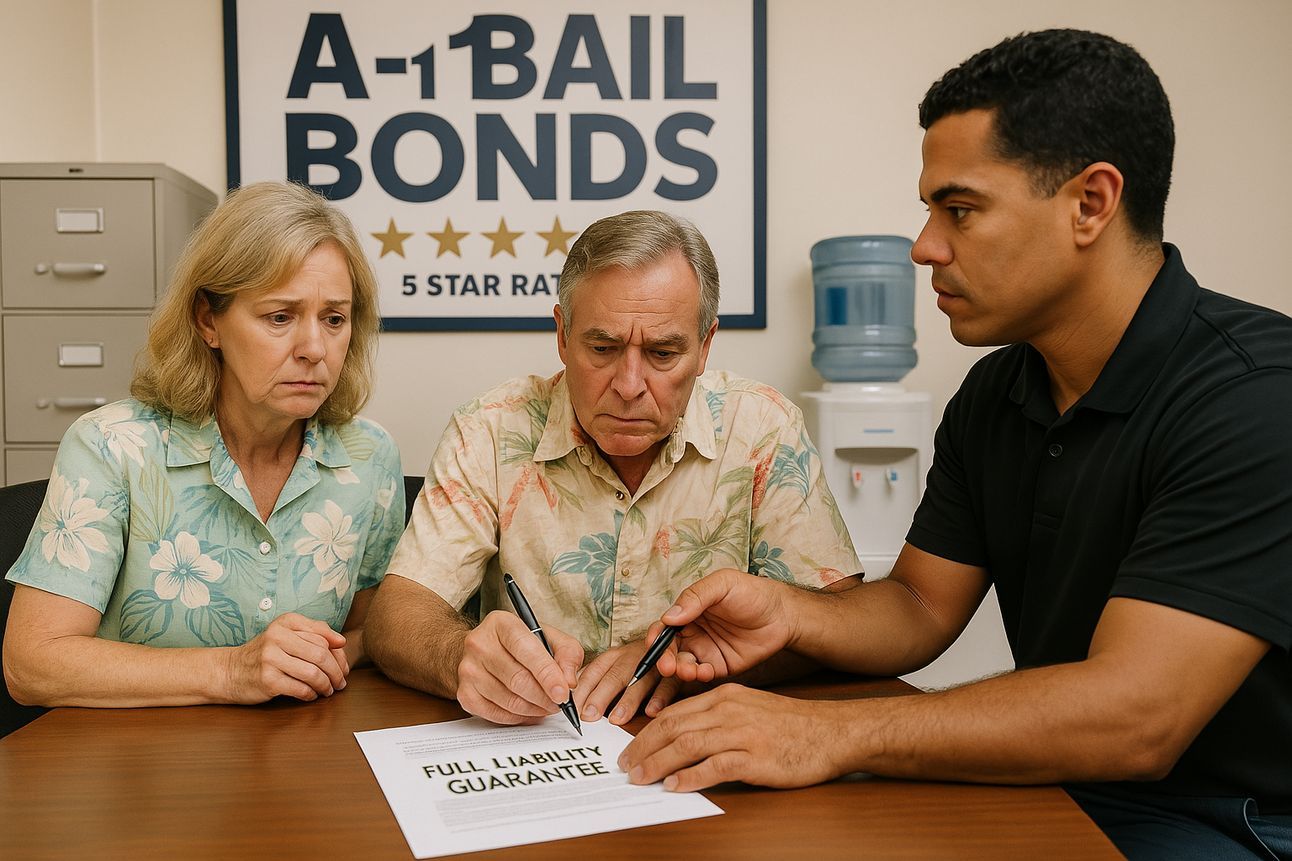
If you're new to the newsletter, or perhaps just need a reminder, I'd like to reintroduce myself. I am a second-generation bail agent. I’ve been a licensed professional in this business for over 20 years, but my family has been involved in the bail and surety game for my entire life. If I wasn't at an A+ after-school program growing up, I was playing in the back of the bail office. |
|
I've seen this industry evolve. And today, as Hawaii’s chief risk underwriter—meaning I hold the highest dollar authority to write bail in the state—I have some stark news regarding the pricing of today's bail bond policies. |
The Macro Problem: A Hardened Insurance Market |
|
To understand what is happening to bail, you have to look at the insurance industry at large. There has been a massive tightening in the market through no fault of anybody in the criminal justice arena. |
|
Due to the massive payouts from the Malibu wildfires, the Kona Low storms, the devastating Lahaina fires, and persistent climate-driven disasters, the global insurance market is rocking. Everyone in Hawaii feels it. We’ve seen hurricane and flood insurance policies sunsetted because providers are fleeing the market. As insurance premiums continue to soar, we are seeing association fees skyrocket alongside them, leaving homeowners with no choice but to purchase supplemental insurance to cover the gaps between their building's policy and their own. The inflation spike that hit during COVID has never truly relented. |
And here is the inside scoop: it has hit the bail bond game, too. |
|
Years ago, our company—which has been in operation for over 50 years and holds the highest AAA financial rating on the island by a mile—could write large bonds without high scrutiny. Mainland sureties trusted our local market knowledge. As a perfect example, I once wrote a $250,000 bail bond without mainland surety approval, and even let the client pay after release, on a handshake because we knew his character and his ties to the community. |
|
Today, even with A-1's pristine rating, we get heavily scrutinized by our mainland sureties on any bond over $100,000. There are lengthy review forms and new protocols even A-1 must adhere to. |
The ugly truth is this: |
| If a prospect doesn't have a reasonable means to pay back the entire face value of the bail bond—not just the 10% premium, but the whole amount—they are likely getting declined. |
|
|
In plain English, it is incredibly difficult to get approval for bail bonds over $100,000 unless you have a homeowner willing to put up a piece of real property. |
The Disconnect in the Courtroom |
It's unfortunate that the prosecutor's office, the AG's office, and the courts seem to have absolutely no idea of this new reality. A bail amount never needs to be set at $1,000,000 to keep someone in custody. In today's market, $250,000 is more than sufficient. |
Every week, I watch highly successful attorneys argue over bail. I know for a fact that only a select few of the lawyers in that very room could personally qualify for a $250,000 bail bond. Yet, they casually argue that a standard W-2 employee—someone just trying to survive under the weight of the price of paradise - has the means to post bond amounts well in excess of $100,000. We know the average American doesn't even have $1,000 in liquid cash for an emergency. |
|
|
The Death of the $1,000 Bail Bond |
Let's now talk about a downstream effect of this new reality: why bail agents are increasingly refusing to do $1,000 and $2,000 bonds. |
|
I’ll give away the game right now. If a client expects an agent to camp out at a facility to bail someone out for a few hours, the standard 10% fee ($100 or $200) simply cannot stretch far enough to cover the cost of rendering the service. How is a bail company supposed to pay an agent, pay taxes, and manage a client's court appearances on $100? |
|
But here is the real kicker: If a client misses just one hearing—even if they get right back into court, get the bench warrant recalled, and get their bail reinstated—the Attorney General's office will still send bail companies a forfeiture notice. I don't fault them at all, it's their duty to enforce forfeitures, and as a competitor that just wants a fair playing field, it's vitally important that delinquent bail companies pay the piper. |
|
To resolve that notice, we have to hire a private attorney to file a set aside motion (costing $500 to $1,250). Then, the court charges a $250 fee as a condition for the set-aside. That is easily a $1,500 loss on a bond where the defendant wasn't even on the run! |
|
This "cost of doing business" deviously winds up a $1,500 Swing. Because of the government's hawkishness and the hardened insurance market, this has dictated a new normal. |
The New Pricing Cheat Sheet |
If you put your accounting hat on, you realize that writing a $15,000 bond at the standard 10% fee ($1,500) gives you just enough reserve to cover the cost of a potential forfeiture and reinstatement. You cannot do that on a $5,000 bond. Unless the defendant is a highly qualified, zero-risk bet (or your wife’s brother), it makes no financial sense to write small bonds only to be forced into the red by one small hiccup. Don’t throw a drink at the messenger, I’m just spittin’ economic facts. |
|
Here is the new reality: |
- $1,000 - $2,000 Bonds: Simply do not qualify for most professional bail agents. They are unwriteable.
- $5,000 Bonds: The new normal is 15% ($750 fee).
- $11,000 Bonds: The new normal is 15% ($1,650 fee).
|
This is the cost of doing business today. But luckily, I’m not a tyrant, and if you’re referred by an attorney, member of a union, or a past customer, I’ll discount and charge 10% on a $11,000; special for you. 😇 |
|
Constructive Solutions for the Judiciary |
|
We don't spend thousands of dollars a year on marketing just to say "no" to callers who need our help. We want to write these bonds. If we want to open this market back up, the courts can easily implement three cost-saving methods: |
- Be Selective with the $250 Court Costs Fee: If a bail agent has already paid significant recovery fees to get a defendant back in custody, why mandate an extra $250 “vig” payment for a set aside approval?
- Paper Set-Asides (No Live Hearings):If a defendant is back in custody or their bail has already been reinstated, it makes absolutely no sense to force a surety attorney to appear live on the record. If the court reinstates a bond, they can simply add the sentence: "Bail bond forfeiture is set aside" to the same order. It satisfies the AG's collection efforts without forcing a $1,500 legal bill onto small businesses. It was common during the pandemic for set aside motions to get approved without a hearing, so I know it can be done.
- Take Warrants Under Advisement: As a matter of common practice, courts could take a bench warrant under advisement for one week. Have a clerk call the bail agent and let them know a hearing was missed. The agent will ensure the defendant appears at the next hearing, and the warrant never goes active.
|
|
A K-Shaped Economy |
|
I remember a day when $1,000 bail bonds were written many times a week. It was an era when a BBQ mix plate at L&L cost $5.50, you could catch the bus for a quarter, and you could pay your way through the Richardson School of Law just by working nights and weekends without pulling out a loan. |
Those days are gone, and we have had to adapt. But if we really care about making bail bonds affordable for those constantly stuck on the bottom half of this K-shaped economy, the system needs to enable small businesses like mine to transact without the massive risk of paying thousands of dollars for a simple missed court appearance. |
Be well, folks, |
Jail Mail Nick. |